

 Sign in
 Search

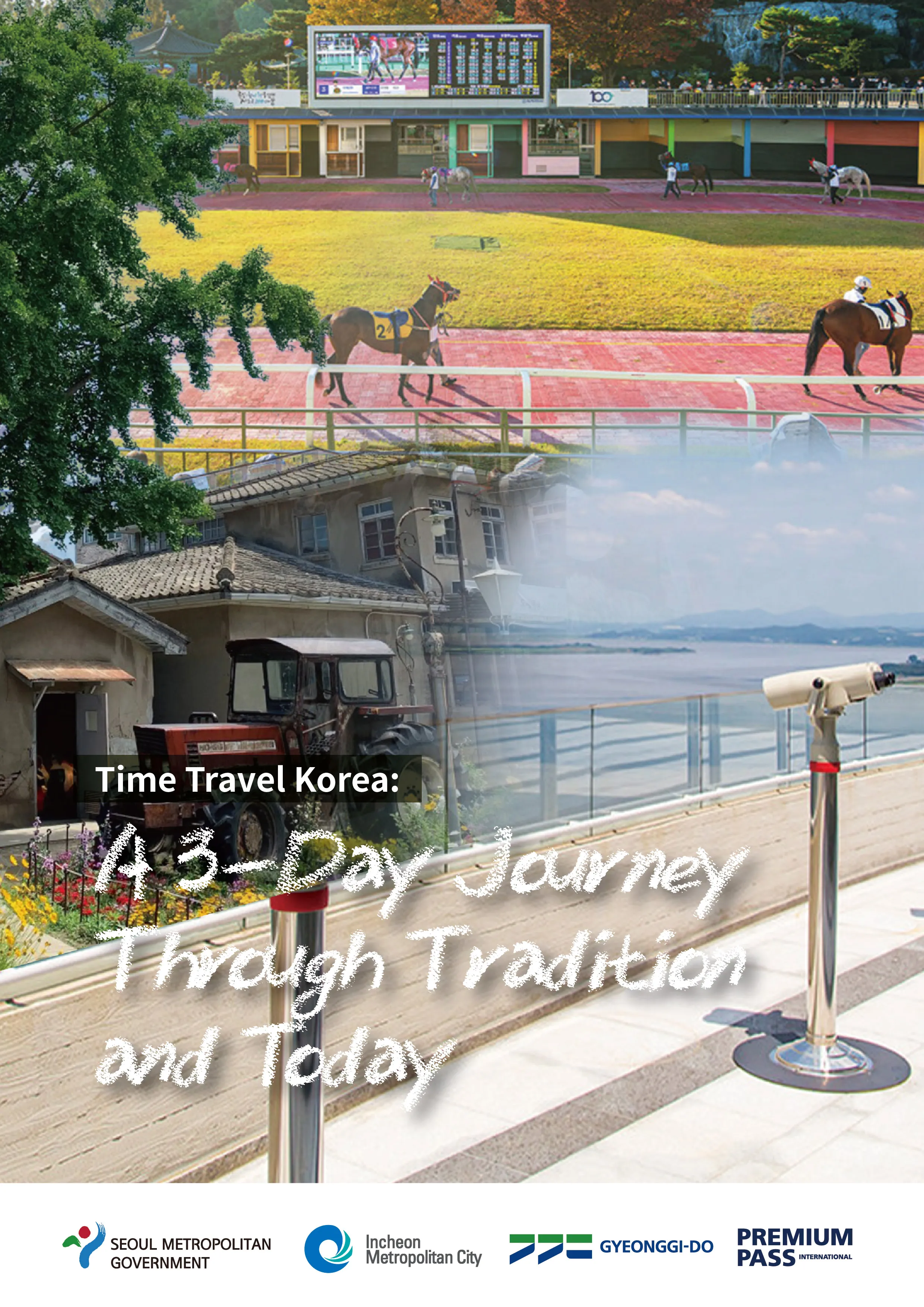
[HIDDEN TREASURE]Time Travel Korea: A 3-Day Journey Through Tradition and Today
Product Information
1. Product Information
Traveler Type | Overseas Tourists |
Travel Duration | 3 days / 2 nights |
Destinations | Gyeonggi (Gimpo / Gwacheon / Paju) Seoul (Jung-gu / Jongno) Incheon (Ganghwa) |
Minimum Number of Participants | private: 6 people / joint: 40 people |
Notes | The tour may be canceled if the number of applicants does not meet the minimum requirement. Reservations and cancellations for this product are subject to the Special Terms and Conditions for Domestic Travel in Korea. |
Inclusions | Transportation & Licensed Tour Guide Easy Travel Care (Travel Insurance) Driver and Guide Tips Admission Fees & Experience Costs Accommodation Fees |
Exclusions | Meals, personal expenses, and any costs not specified in the itinerary |
※ The itinerary and meal venues are subject to change due to local circumstances.
※ The program may be adjusted depending on the travel schedule and duration.
2. Itinerary
Itinerary - Day 1 | |||
Time | Activity | Details | Remarks |
09:00 | Meeting Point: Myeongdong Travel Center | 1F, voco Seoul Myeongdong | voco Seoul Myeongdong, 52 Toegye-ro, Jung-gu, Seoul |
09:00~09:30 (30’) | Transfer (Myeongdong Travel Center → Let’s Run Park Seoul) | vehicle transfer |
|
09:30~11:00 (90’) | Let’s Run Park Seoul | *Watch the 10:35 horse race | Admission included *Closed Mon–Thu *Race Days: Sat/Sun |
11:00~12:00 (60’) | Transfer (Let’s Run Park Seoul → Lunch venue) | By vehicle |
|
12:00~13:00 (60’) | Lunch | *Geumseongru Filming location for “Squid Game 2” | Meal not included
|
13:00~13:05 (5’) | Transfer (Lunch venue → Namsangol Hanok Village) | By vehicle |
|
13:05~:14:40 (95’) | Namsangol Hanok Village | Guided tour & traditional games experience | * Closed on Mondays |
14:40~15:10 (30’) | Transfer (Namsangol Hanok Village → Tapgol Park) | By vehicle Purchase red bean bread | *Tous Les Jours, CJ CheilJedang Center Branch Snack not included |
15:10~15:40 (30‘) | Tapgol Park | Guided tour & “Squid Game” reenactment |
|
15:40~:15:50 (10’) | Transfer (Tapgol Park → Hyehwa Station) | By vehicle | *Hyehwa Station (Exit 2) |
15:50~16:00 (10‘) | Segyero Dalgona | Dalgona candy making Supplier for “Squid Game” |
|
16:00~16:20 (20‘) | Transfer (Hyehwa Station → National Folk Museum of Korea) | By vehicle |
|
16:20~17:40 (80’) | National Folk Museum of Korea | Indoor exhibits & “7080 Street” experience |
|
17:40~17:55 (15’) | Transfer (National Folk Museum of Korea → Hotel) | By vehicle |
|
17:55 | Hotel | Free time | *3-star hotel in Seoul |
Itinerary - Day 2 | |||
Time | Activity | Details | Remarks |
~09:00 | Meeting Point: Hotel Lobby |
|
|
09:00~10:30 (90‘) | Transfer (Hotel → DMZ) | By vehicle |
|
10:30~14:00 (210‘) | DMZ | Tour & lunch |
|
14:00~15:00 (60‘) | Transfer (DMZ → Starbucks) | By vehicle |
|
15:00~16:00 (60‘) | Aegibong Starbucks |
| Closes at 16:30 |
16:00~17:30 (90‘) | Transfer (Starbucks → Hotel) |
| *3-star hotel in Seoul |
17:30~ | Free time |
|
|
Itinerary - Day 3 | |||
Time | Activity | Details | Remarks |
09:00 | Meeting Point: Hotel Lobby |
|
|
09:00~10:20 (80’) | Transfer (Hotel → Ganghwa Luge) | vehicle transfer |
|
10:20~11:20 (60’) | Ganghwa Luge | Luge & cable car ride | (1 pass included; extra rides not included) |
11:20~11:30 (10’) | Transfer (Ganghwa Luge → Geumpung Brewery) | By vehicle |
|
11:30~12:30 (60’) | Geumpung Brewery | DIY “Geumpung Cup Makgeolli” making | Experience fee included |
12:30~13:30 (60’) | Lunch | *Janjanhan Restaurant | Meal not included *Closed on Wednesdays |
13:30~14:00 (30’) | Transfer (Geumpung Brewery → Sochang Fabric Experience Center) | By vehicle |
|
14:00~15:00 (60’) | Sochang Fabric Experience Center | Sochang stamp & sewing experience, tea tasting, weaving demonstration | Experience fee included *Closed on Mondays |
15:00~15:05 (5’) | Transfer (Sochang Fabric Experience Center → Joyangbangjik) | By vehicle |
|
15:05~16:05 (60’) | Joyangbangjik | Café visit | Beverage not included |
16:05~17:40 (95’) | Return |
|
|
17:40 | Arrive at Myeongdong Travel Center | Dismissal |
|
Timings may vary depending on traffic conditions.The program may be subject to changes due to local circumstances.
3. Itinerary info
Let’s Run Park Seoul
Let’s Run Park Seoul is open to the public free of charge as a leisure space for citizens. It has been developed into a horse-themed leisure area for local residents, creating a family-friendly theme park. The park offers attractions such as a children’s riding arena, children’s lounge, playground, and Pony Land, making it an enjoyable destination for visitors of all ages.
Mokma-gil (Horse Road) → Horse Museum → Pony Land → Horse Racing Viewing (10:35 race)


Namsangol Hanok Village
Located on the northern slope of Namsan, Namsangol Hanok Village features five restored traditional Korean houses, gardens, pavilions, and cultural spaces where visitors can experience Korean traditions in the heart of the city.
Programs include hanbok wearing, hanji folding, calligraphy, tea ceremonies, traditional etiquette classes, and Korean medicine experiences. On weekends, real traditional weddings are held. The courtyard offers folk games like jegichagi, yutnori, and biseokchigi, making it an engaging spot for families and visitors alike.


Tapgol Park
Built on the former site of Wongaksa Temple, Tapgol Park is the first modern park in Seoul, established in 1897 by British advisor John McLeavy Brown and officially opened in 1920. It is historically significant as the starting point of the March 1st Independence Movement in 1919, where the Declaration of Independence was first read aloud.
The park is home to cultural treasures such as the Ten-Story Stone Pagoda of Wongaksa Temple (National Treasure), Wongaksa Monument (Treasure), the March 1st Movement Monument, murals, and statues honoring independence leaders Son Byong-hi and Han Yong-un.

National Folk Museum of Korea
The National Folk Museum of Korea is the country’s only national museum dedicated to traditional Korean lifestyles, showcasing over 4,000 artifacts related to folk culture. It serves as a center for cultural education, fostering pride in Korean heritage through research, collection, preservation, and exhibitions of traditional life and customs.
The museum features three permanent exhibition halls, two special exhibition halls, and outdoor displays, blending tradition with modernity. It also offers hands-on programs for foreign residents and visitors, providing an engaging introduction to Korean culture.

DMZ
2Since 2002, the DMZ Peace Tour in Paju has been open to the public as a space embodying the hope for peace and reunification. As one of Paju’s most iconic attractions, it offers visitors a rare opportunity to experience the historical sites of Korea’s division firsthand.
Nearby, a symbolic park represents hope and unity, featuring the Bridge of Freedom—used by prisoners of war returning home during the Korean War—along with various monuments that leave a lasting impression on visitors.

Aegibong Peace Ecological Park & Starbucks
Located at the westernmost edge of the DMZ, Aegibong Peace Ecological Park offers a rare and moving view of North Korea. From its observatory, visitors can see the landscapes of the North—so close, yet unreachable—providing a powerful reminder of the peninsula’s division and the hope for reunification.
Nearby, at Korea’s border, stands a unique Starbucks unlike any other. Here, you can enjoy a cup of coffee while gazing across the river into North Korea, experiencing a moment where everyday tranquility meets historical tension. More than just a café, it is a symbolic space that leaves a lasting impression on all who visit.


Ganghwa Luge
The Ganghwa Cable Car (Gondola) is the only facility in Korea where you can comfortably enjoy the stunning sunsets over the West Sea. Stretching 700 meters from the base station to the summit of Gilsang Mountain, it offers a safe and scenic ride with panoramic views of Ganghwa Island.
The luge is an exciting, gravity-powered ride that uses specially designed carts without motors, relying solely on the slope of the track and gravity. Riders can steer and brake, making it a fun activity for all ages.
With a total track length of 1.8 km and two courses—the Ocean Course and the Valley Course—it is one of the largest luge facilities in Asia. Both tracks feature 360° curves, tunnels, and drops, offering thrilling moments and breathtaking views of the sea as you race downhill.

Geumpung Brewery
Registered as an Incheon Metropolitan City Cultural Heritage site, Geumpung Brewery is a living space where tradition has been passed down for three generations. In 2021, it became the first in Ganghwa Island to obtain a local specialty liquor license, aiming to promote the use of local ingredients and produce globally recognized beverages. The brewery has gained attention for its creative packaging made from recycled rice sacks.
Built in 1931 during the Japanese colonial period, this two-story structure preserves the architectural style of early modern factories. It largely retains its original form, offering historical insight into the industrialization of Ganghwa Island’s brewing industry after Korea’s opening to the world.
60-Minute Hands-On Program:
Learn about Geumpung Makgeolli → Make your own Geumpung Cup Makgeolli (1 per person) → Geumpung Sulle-gil (Brewery Bingo) → Lucky Dice Game → Receive an “Ain Sulfenner” beverage & commemorative photo

Sochang Fabric Experience Center
Housed in a remodeled 1938 hanok and former dyeing factory on the site of the old Pyeonghwa Textile Mill, the Sochang Fabric Experience Center was opened in 2016 to preserve and highlight the heritage and value of sochang—a traditional cotton fabric and one of Ganghwa’s key industries. Visitors can learn about the history of Ganghwa’s textile industry, from its beginnings with hwamunseok (woven mats) to its final product, sochang.
Experience Programs:
Sochang Stamp Handkerchief Making – Use stamps shaped like Ganghwa’s local specialties (turnip, ginseng, grapes, etc.) to decorate a handkerchief, plus try sochang hand-stitching.
Traditional Weaving Demonstration & Participation – View and experience manual and mechanical looms from the former Pyeonghwa Textile factory, learning about traditional weaving techniques.
Traditional Tea Ceremony – Enjoy Korean tea in a restored hanok tea room.

Joyangbangjik
Founded in 1933 as the first textile factory in Ganghwa financed with domestic capital, Joyangbangjik was once a thriving symbol of the local textile industry. After the decline of textile production in the region, the building fell into disuse, eventually becoming an abandoned structure.
Today, it has been transformed into a massive café, preserving the factory’s original 300-pyeong (approx. 991 m²) site and structural framework. Long workbenches have been repurposed into coffee tables, and the once-empty space is now filled with antiques sourced from China, Europe, and beyond. Every corner of the café retains traces of its industrial past, blending history with a unique modern atmosphere.

4. Meeting Point: Myeongdong Travel Center
1st Floor, voco Seoul Myeongdong, in front of Hoehyeon Station

The center offers various travel services such as luggage storage, delivery, and concierge assistance. It also serves as the meeting point for SSOLUCK tour products, so please be sure to arrive on time for your scheduled meeting.
Select Date
Joint Tour(Bus)
0Private Tour(Mini Van)
0
- Total Price $0.00