%20--%3e%3cg%3e%3cg%20id='_레이어_1'%20data-name='레이어_1'%3e%3cg%3e%3cpath%20class='cls-2'%20d='M66.18,20.67c-2.35,0-3.55,1.02-3.58,2.42-.03,1.53,1.47,2.28,3.68,2.76l2.15.51c4.74,1.06,7.5,3.41,7.54,7.37-.03,4.67-3.65,7.5-9.79,7.5-4.46,0-7.79-1.48-9.31-4.46-.94-1.83.44-4,2.5-4h.13c1.05,0,1.97.63,2.45,1.57.68,1.35,2.18,2.04,4.17,2.04,2.46,0,3.92-1.09,3.96-2.66-.03-1.43-1.3-2.18-4.02-2.8l-2.59-.61c-4.26-.99-6.85-3.1-6.85-6.82-.03-4.57,4.02-7.64,9.62-7.64,3.56,0,6.33,1.22,7.91,3.25,1.4,1.8.05,4.43-2.23,4.43h0c-.92,0-1.78-.49-2.23-1.3-.56-1-1.74-1.56-3.48-1.56Z'/%3e%3cpath%20class='cls-2'%20d='M45.11,20.67c-2.35,0-3.55,1.02-3.58,2.42-.03,1.53,1.47,2.28,3.68,2.76l2.15.51c4.74,1.06,7.5,3.41,7.54,7.37-.03,4.67-3.65,7.5-9.79,7.5-4.46,0-7.79-1.48-9.31-4.46-.94-1.83.44-4,2.5-4h.13c1.05,0,1.97.63,2.45,1.57.68,1.35,2.18,2.04,4.17,2.04,2.46,0,3.92-1.09,3.96-2.66-.03-1.43-1.3-2.18-4.02-2.8l-2.59-.61c-4.26-.99-6.85-3.1-6.85-6.82-.03-4.57,4.02-7.64,9.62-7.64,3.56,0,6.33,1.22,7.91,3.25,1.4,1.8.05,4.43-2.23,4.43h0c-.92,0-1.78-.49-2.23-1.3-.56-1-1.74-1.56-3.48-1.56Z'/%3e%3cpath%20class='cls-2'%20d='M89.11,41.24c-6.65,0-11.73-4.57-11.73-12.69s5.08-12.69,11.73-12.69,11.73,4.54,11.73,12.69-5.12,12.69-11.73,12.69ZM89.11,20.98c-3.61,0-5.8,2.66-5.8,7.57s2.18,7.57,5.8,7.57,5.8-2.66,5.8-7.57-2.18-7.57-5.8-7.57Z'/%3e%3cpath%20class='cls-2'%20d='M121.37,19.11c-.01.13-.02.25-.03.38v.06c0,.13,0,.25,0,.36v5.95h5.94c.28,0,.56,0,.82-.03,2.89-.29,5.19-2.59,5.47-5.48.18-1.85-.46-3.66-1.77-4.96-1.3-1.3-3.11-1.95-4.96-1.76-2.89.29-5.19,2.59-5.47,5.47Z'/%3e%3cg%3e%3cpath%20class='cls-1'%20d='M153.63,16.2c1.6,0,2.9,1.3,2.9,2.9v13.03c0,5.52-4.19,9.11-10.4,9.11s-10.4-3.58-10.4-9.11v-13.03c0-1.6,1.3-2.9,2.9-2.9h0c1.6,0,2.9,1.3,2.9,2.9v12.55c0,2.63,1.88,4.5,4.6,4.5s4.57-1.88,4.57-4.5v-12.55c0-1.6,1.3-2.9,2.9-2.9h.03Z'/%3e%3cpath%20class='cls-1'%20d='M171.03,20.98c-3.65,0-5.87,2.76-5.87,7.57s2.28,7.57,5.83,7.57c2.05,0,3.61-.85,4.43-2.35.5-.92,1.47-1.5,2.52-1.49h0c2.19.01,3.52,2.46,2.31,4.29-1.75,2.65-4.9,4.67-9.36,4.67-6.68,0-11.66-4.57-11.66-12.69s5.08-12.69,11.66-12.69c4.38,0,7.9,1.82,9.69,5.14,1,1.85-.34,4.1-2.44,4.1h-.12c-1.1,0-2.08-.63-2.56-1.62-.77-1.57-2.32-2.51-4.43-2.51Z'/%3e%3cpath%20class='cls-1'%20d='M185.86,16.2h1.32c1.24,0,2.24,1,2.24,2.24v8.3h.34l6.91-8.79c.87-1.1,2.19-1.75,3.6-1.75h0c1.88,0,2.92,2.17,1.75,3.64l-4.9,6.11c-.61.76-.66,1.82-.13,2.63l5.8,8.85c.98,1.49-.09,3.47-1.87,3.47h-1.58c-.77,0-1.48-.39-1.89-1.04l-3.91-6.13c-.82-1.29-2.67-1.39-3.63-.2h0c-.32.4-.5.9-.5,1.41v3.72c0,1.24-1,2.24-2.24,2.24h-1.32c-1.24,0-2.24-1-2.24-2.24v-20.21c0-1.24,1-2.24,2.24-2.24Z'/%3e%3cpath%20class='cls-1'%20d='M131.92,34.3c-.29-2.94-2.67-5.32-5.61-5.61-.13-.01-.26-.02-.38-.03h0s-.07,0-.07,0c-.12,0-.25,0-.37,0h-6.09v6.09c0,.27,0,.55.03.83.29,2.94,2.67,5.32,5.61,5.61,3.97.39,7.29-2.92,6.89-6.89Z'/%3e%3cpath%20class='cls-1'%20d='M118.64,34.76v-6.09h-6.09c-.12,0-.25,0-.37,0h-.07c-.13,0-.26.01-.38.03-2.94.29-5.32,2.67-5.61,5.61-.39,3.97,2.92,7.29,6.89,6.89,2.94-.29,5.32-2.67,5.61-5.61.03-.28.04-.56.03-.83Z'/%3e%3cpath%20class='cls-1'%20d='M118.62,21.89c0-.27,0-.55-.03-.83-.29-2.94-2.67-5.32-5.61-5.61-3.97-.39-7.29,2.92-6.89,6.89.29,2.94,2.67,5.32,5.61,5.61.13.01.26.02.38.03h0s.06,0,.06,0c.13,0,.26,0,.38,0h6.09v-6.09Z'/%3e%3c/g%3e%3c/g%3e%3c/g%3e%3c/g%3e%3c/svg%3e)
[HIDDEN TREASURE][Urban to Nature] Breathing Hanyang: Namsan Wall Hiking



The most Korean Hiking experience in the heart of Seoul
Step into history along the ancient stone paths of Seoul’s Namsan Mountain.
Follow the fortress wall trail, take in panoramic city views, and relive Korea’s past at a relaxed hiking pace.
🧾 Product Information
Category | Details |
Traveler Type | Domestic / International Tourists |
Duration | One-day tour |
Destination City | Seoul |
Tour Category | Walking Tour (Hiking) |
Included | 500ml bottled water |
※ Minimum number of participants: 2 people
Notice
The tour may be canceled if the number of participants is below the minimum requirement.
Reservation and cancellation are subject to Korea’s Special Terms and Conditions for Domestic Travel.
🕒 Itinerary
Time | Activity | Notes |
|---|---|---|
9:30 | Assembly: Myeongdong Travel Center | 1F, VOCO Seoul Myeongdong |
9:35 ~ 9:40 (5’) | Transfer (Myeongdong Travel Center → Baekbeom Square) | On foot |
9:40 ~ 10:00 (20’) | Baekbeom Square | Walk-through viewing (Statues of Baekbeom Kim Gu) |
10:00 ~ 11:00 (60’) | Hanyangdoseong Trail Hiking | From Baekbeom Square → Seoul City Wall Museum → Jamdubong Photo Island → Namsan Beacon Mound / N Seoul Tower |
11:00 ~ 12:10 (70’) | Namsan Beacon Lighting Ceremony Viewing | Closed on Mondays *Free viewing and individual dismissal ** Subject to weather conditions |
Itinerary Information
Baekbeom Plaza (Kim Koo Memorial Square)

○ Site Information
Located on Namsan Mountain, Baekbeom Plaza is both a public square and park. It was named in honor of Kim Koo (Baekbeom), a revered Korean independence activist.
In 1969, to commemorate the 20th anniversary of his death, a statue of Kim Koo was erected by sculptors Kim Kyung-seung and Min Bok-jin under the supervision of the Kim Koo Memorial Statue Committee. The unveiling ceremony was held on August 23, Kim Koo’s birthday, marking the official naming of the plaza as Baekbeom Plaza.
The plaza features a wide grassy lawn and statues of notable figures such as Kim Koo and former Vice President Yi Si-yeong. Adjacent to the plaza are the Namsan section of the Seoul City Wall and, uphill, the Ahn Jung-geun Memorial Hall and the Seoul Metropolitan Office of Education Research Center. Downhill, visitors will find a statue of General Kim Yu-sin, a legendary commander from the Silla Dynasty.
This site was once the location of the Shinto Shrine established by the Japanese colonial government. After Korea’s liberation, the shrine was demolished, and landmarks such as the Ahn Jung-geun Memorial Hall were built in its place.
○ Itinerary Information
A walking tour passing through key landmarks:
Follow the Fortress Wall Trail → Arrive at the Statue of Kim Koo (Baekbeom)
Ahn Jung-geun Memorial Hall
 ○ Site Information
The Ahn Jung-geun Memorial Hall is a national memorial managed by the Ministry of Patriots and Veterans Affairs, dedicated to exhibiting the relics and historical records of Ahn Jung-geun.
Ahn Jung-geun is a national hero who, during a time when Korea was suffering under Japanese imperial aggression following its forced opening, took a stand by assassinating Itō Hirobumi, a key figure behind Japan’s colonial rule. His courageous act was driven by deep patriotism and helped illuminate the path for Korea’s future.
The memorial hall was originally opened in 1970 on the former site of the Chōsen Shrine—a symbol of Japanese colonialism on Namsan—and was newly rebuilt in 2010. It serves to honor and promote Ahn Jung-geun’s noble spirit of sacrifice and his vision of peace, fostering love for the nation among citizens and contributing to the cause of global peace.
○ Itinerary Information
We will pass by this site during the hike, but we will not enter.
Hanyangdoseong Ruins Exhibition Hall (Seoul City Wall)
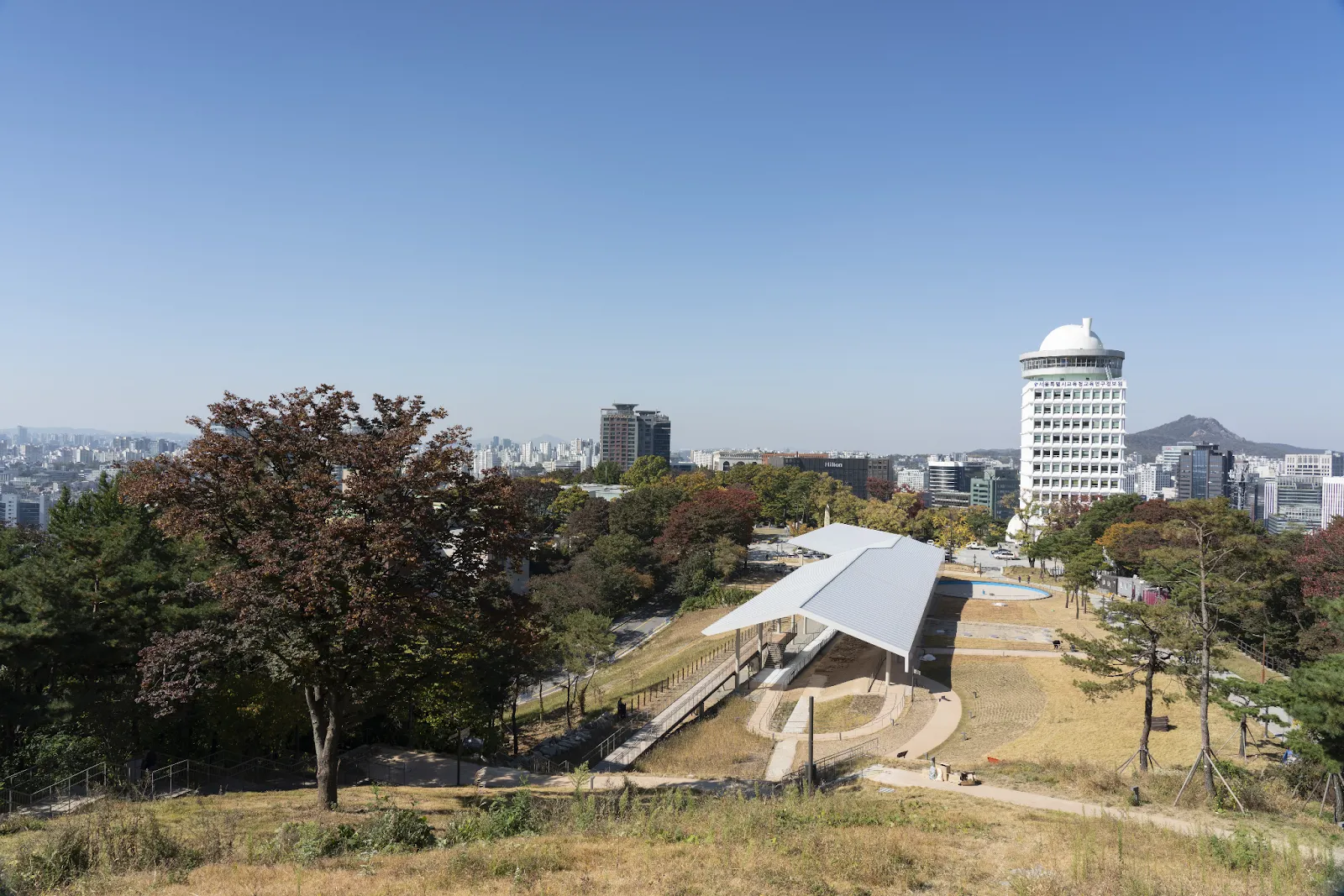
 ○ Site Information
The Hanyangdoseong Ruins Exhibition Hall displays the remains of the Seoul City Wall that were uncovered during excavations conducted from 2013 to 2014. These ruins are part of the Namsan section of the Hanyangdoseong (Seoul City Wall), a segment once thought to have been completely lost. The site on the slopes of Namsan provides a compact yet vivid glimpse into the long history of the wall.
The exhibition area includes a range of historical layers—from the original construction of the Hanyangdoseong in 1396, to the site of the Chōsen Shrine’s main hall built in 1925 during Japanese occupation, and the Namsan Fountain installed in 1969. Visitors can explore the full narrative of this area: from the Joseon Dynasty’s wall-building techniques, to the suffering during the colonial era, post-liberation urban development, and the recent archaeological discoveries and restoration efforts.
○ Itinerary Information
We will pass by this site during the hike, but we will not enter.
We will not enter the building, but will view the outdoor exhibits while continuing the hike.
Hanyangdoseong Trail (Fortress Wall Trail)

 ○ Site Information
Hanyangdoseong (Seoul City Wall) was built to mark the boundaries of Hanseongbu, the capital city of the Joseon Dynasty, to assert royal authority, and to defend against outside invasions. Construction began in the 5th year of King Taejo’s reign (1396), following the ridgelines of the four inner mountains—Baegak (Bugaksan), Naksan, Mokmyeok (Namsan), and Inwangsan. The wall underwent several reconstructions over time.
With an average height of 5 to 8 meters and a total length of approximately 18.6 kilometers, Hanyangdoseong is the longest-standing city wall in the world that functioned as an urban fortress for over five centuries (1396–1910).
○ Itinerary Information
Hiking along the Hanyangdoseong Trail
Photo opportunities at Jamdubong Photo Island and Namsan Beacon Mound
Namsan Beacon Lighting Ceremony

 ○ Site Information
When you climb Namsan Mountain, you may notice five black brick chimneys that stand out against the landscape—these are the Namsan Beacon Mound, designated as Seoul Monument No. 14. While it now offers a scenic view of the city, it once served as a key part of Korea’s ancient relay communication system. Beacon mounds were established across the country to quickly deliver urgent messages or emergency news to the capital. Fires and smoke signals were used to send information from remote areas all the way to central command.
The Namsan Beacon Mound dates back to the early Joseon Dynasty. In 1394, King Taejo established the capital in Hanyang (modern-day Seoul) and built the central beacon on Namsan. It received final signals from beacon mounds across the nation. It was also referred to as "Mokmyeoksan Bonghwa" after Namsan’s old name, and “Gyeongbonghwa” to represent its role as the capital’s beacon.
Signals were sent using smoke during the day and fire at night. The number of signals indicated the level of threat:
– One: Peaceful
– Two: Enemy spotted
– Three: Enemy approaching
– Four: Invasion
– Five: Battle underway
During the Joseon era, there were 673 beacon mounds nationwide, and messages could reach Namsan within a single day, no matter where the alert originated.
Originally, five separate beacons were positioned across Namsan, but the one you see today in front of the Palgakjeong Pavilion was reconstructed in 1993, based on historical documents such as the Cheonggudo. The beacon remained in use until 1895, just after the Gabo Reform. Due to severe damage from graffiti and other factors, the site was closed to the public in 2005, then reopened in 2007 with a reenactment ceremony of the beacon lighting.
○ Event Information
The Beacon Lighting Ceremony is held daily around noon, except on Mondays. About 30 minutes before the main event, the ritual begins with a guard ceremony and a patrol march around the beacon mound. As noon approaches, the sounds of traditional horns (nabal and nagak) signal the upcoming lighting.
When the bell at Jonggak Pavilion in Jongno rings 12 times, the beacon is lit—symbolizing peace with a single smoke signal, following the historical system.
Although the lighting is the main highlight, the guard and patrol rituals before and after the event are also worth watching. While smaller in scale than the royal guard changing ceremony at Deoksugung Palace, the beacon's historical and geographical significance offers a unique and memorable experience. After the ceremony, visitors are welcome to take photos with the beacon guards.
📍 Meeting Point: Myeongdong Travel Center
* VOCO Seoul Myeongdong 1F
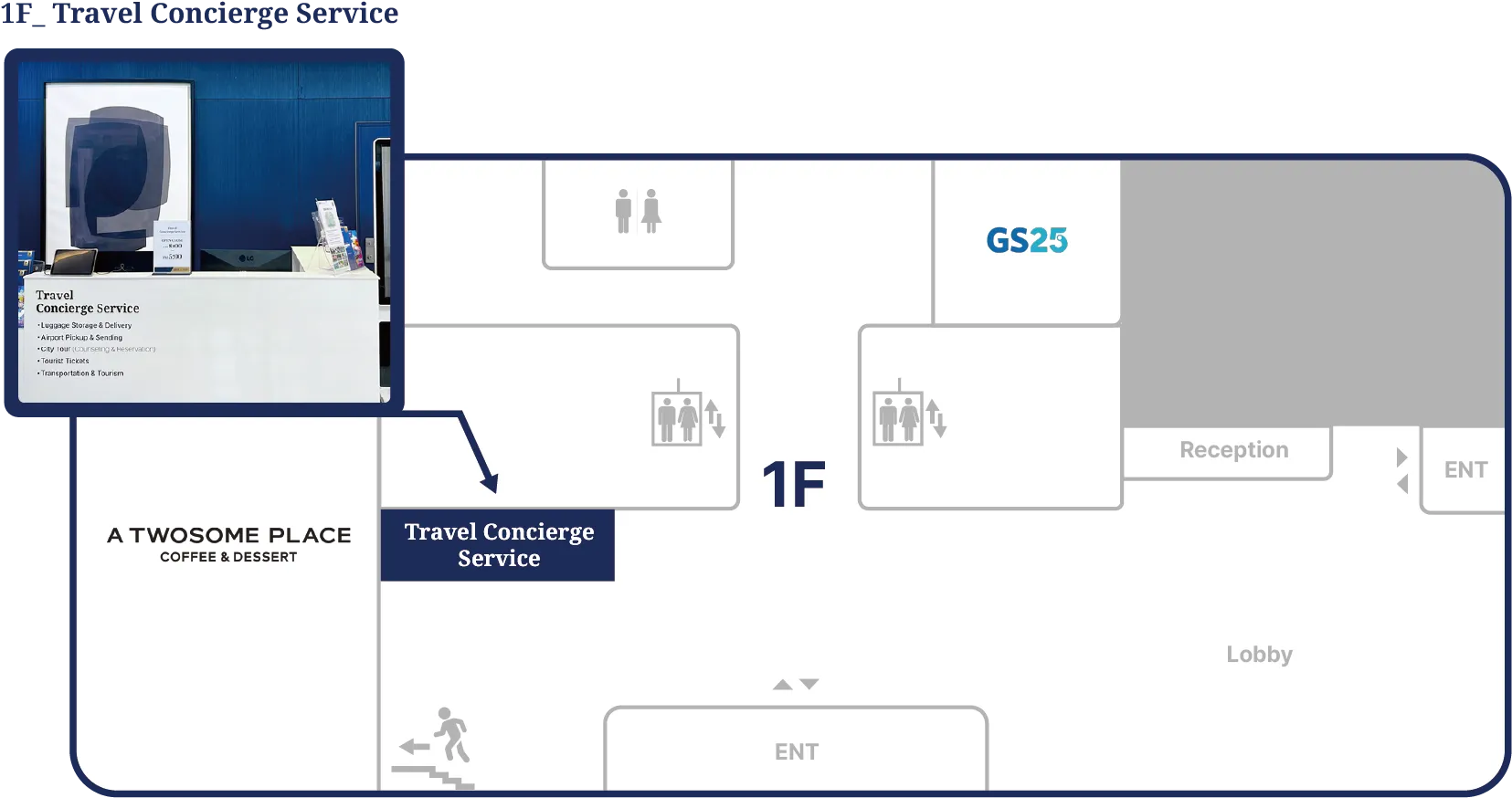
Provides traveler services such as luggage storage, delivery, and concierge.
Meeting point for SSOLUCK tour products.
Please be punctual for your scheduled meeting time.
Free viewing and individual dismissal | |
|---|---|
Select Date
- Select date
Select Option
- Total Price US$0.00