%20--%3e%3cg%3e%3cg%20id='_레이어_1'%20data-name='레이어_1'%3e%3cg%3e%3cpath%20class='cls-2'%20d='M66.18,20.67c-2.35,0-3.55,1.02-3.58,2.42-.03,1.53,1.47,2.28,3.68,2.76l2.15.51c4.74,1.06,7.5,3.41,7.54,7.37-.03,4.67-3.65,7.5-9.79,7.5-4.46,0-7.79-1.48-9.31-4.46-.94-1.83.44-4,2.5-4h.13c1.05,0,1.97.63,2.45,1.57.68,1.35,2.18,2.04,4.17,2.04,2.46,0,3.92-1.09,3.96-2.66-.03-1.43-1.3-2.18-4.02-2.8l-2.59-.61c-4.26-.99-6.85-3.1-6.85-6.82-.03-4.57,4.02-7.64,9.62-7.64,3.56,0,6.33,1.22,7.91,3.25,1.4,1.8.05,4.43-2.23,4.43h0c-.92,0-1.78-.49-2.23-1.3-.56-1-1.74-1.56-3.48-1.56Z'/%3e%3cpath%20class='cls-2'%20d='M45.11,20.67c-2.35,0-3.55,1.02-3.58,2.42-.03,1.53,1.47,2.28,3.68,2.76l2.15.51c4.74,1.06,7.5,3.41,7.54,7.37-.03,4.67-3.65,7.5-9.79,7.5-4.46,0-7.79-1.48-9.31-4.46-.94-1.83.44-4,2.5-4h.13c1.05,0,1.97.63,2.45,1.57.68,1.35,2.18,2.04,4.17,2.04,2.46,0,3.92-1.09,3.96-2.66-.03-1.43-1.3-2.18-4.02-2.8l-2.59-.61c-4.26-.99-6.85-3.1-6.85-6.82-.03-4.57,4.02-7.64,9.62-7.64,3.56,0,6.33,1.22,7.91,3.25,1.4,1.8.05,4.43-2.23,4.43h0c-.92,0-1.78-.49-2.23-1.3-.56-1-1.74-1.56-3.48-1.56Z'/%3e%3cpath%20class='cls-2'%20d='M89.11,41.24c-6.65,0-11.73-4.57-11.73-12.69s5.08-12.69,11.73-12.69,11.73,4.54,11.73,12.69-5.12,12.69-11.73,12.69ZM89.11,20.98c-3.61,0-5.8,2.66-5.8,7.57s2.18,7.57,5.8,7.57,5.8-2.66,5.8-7.57-2.18-7.57-5.8-7.57Z'/%3e%3cpath%20class='cls-2'%20d='M121.37,19.11c-.01.13-.02.25-.03.38v.06c0,.13,0,.25,0,.36v5.95h5.94c.28,0,.56,0,.82-.03,2.89-.29,5.19-2.59,5.47-5.48.18-1.85-.46-3.66-1.77-4.96-1.3-1.3-3.11-1.95-4.96-1.76-2.89.29-5.19,2.59-5.47,5.47Z'/%3e%3cg%3e%3cpath%20class='cls-1'%20d='M153.63,16.2c1.6,0,2.9,1.3,2.9,2.9v13.03c0,5.52-4.19,9.11-10.4,9.11s-10.4-3.58-10.4-9.11v-13.03c0-1.6,1.3-2.9,2.9-2.9h0c1.6,0,2.9,1.3,2.9,2.9v12.55c0,2.63,1.88,4.5,4.6,4.5s4.57-1.88,4.57-4.5v-12.55c0-1.6,1.3-2.9,2.9-2.9h.03Z'/%3e%3cpath%20class='cls-1'%20d='M171.03,20.98c-3.65,0-5.87,2.76-5.87,7.57s2.28,7.57,5.83,7.57c2.05,0,3.61-.85,4.43-2.35.5-.92,1.47-1.5,2.52-1.49h0c2.19.01,3.52,2.46,2.31,4.29-1.75,2.65-4.9,4.67-9.36,4.67-6.68,0-11.66-4.57-11.66-12.69s5.08-12.69,11.66-12.69c4.38,0,7.9,1.82,9.69,5.14,1,1.85-.34,4.1-2.44,4.1h-.12c-1.1,0-2.08-.63-2.56-1.62-.77-1.57-2.32-2.51-4.43-2.51Z'/%3e%3cpath%20class='cls-1'%20d='M185.86,16.2h1.32c1.24,0,2.24,1,2.24,2.24v8.3h.34l6.91-8.79c.87-1.1,2.19-1.75,3.6-1.75h0c1.88,0,2.92,2.17,1.75,3.64l-4.9,6.11c-.61.76-.66,1.82-.13,2.63l5.8,8.85c.98,1.49-.09,3.47-1.87,3.47h-1.58c-.77,0-1.48-.39-1.89-1.04l-3.91-6.13c-.82-1.29-2.67-1.39-3.63-.2h0c-.32.4-.5.9-.5,1.41v3.72c0,1.24-1,2.24-2.24,2.24h-1.32c-1.24,0-2.24-1-2.24-2.24v-20.21c0-1.24,1-2.24,2.24-2.24Z'/%3e%3cpath%20class='cls-1'%20d='M131.92,34.3c-.29-2.94-2.67-5.32-5.61-5.61-.13-.01-.26-.02-.38-.03h0s-.07,0-.07,0c-.12,0-.25,0-.37,0h-6.09v6.09c0,.27,0,.55.03.83.29,2.94,2.67,5.32,5.61,5.61,3.97.39,7.29-2.92,6.89-6.89Z'/%3e%3cpath%20class='cls-1'%20d='M118.64,34.76v-6.09h-6.09c-.12,0-.25,0-.37,0h-.07c-.13,0-.26.01-.38.03-2.94.29-5.32,2.67-5.61,5.61-.39,3.97,2.92,7.29,6.89,6.89,2.94-.29,5.32-2.67,5.61-5.61.03-.28.04-.56.03-.83Z'/%3e%3cpath%20class='cls-1'%20d='M118.62,21.89c0-.27,0-.55-.03-.83-.29-2.94-2.67-5.32-5.61-5.61-3.97-.39-7.29,2.92-6.89,6.89.29,2.94,2.67,5.32,5.61,5.61.13.01.26.02.38.03h0s.06,0,.06,0c.13,0,.26,0,.38,0h6.09v-6.09Z'/%3e%3c/g%3e%3c/g%3e%3c/g%3e%3c/g%3e%3c/svg%3e)
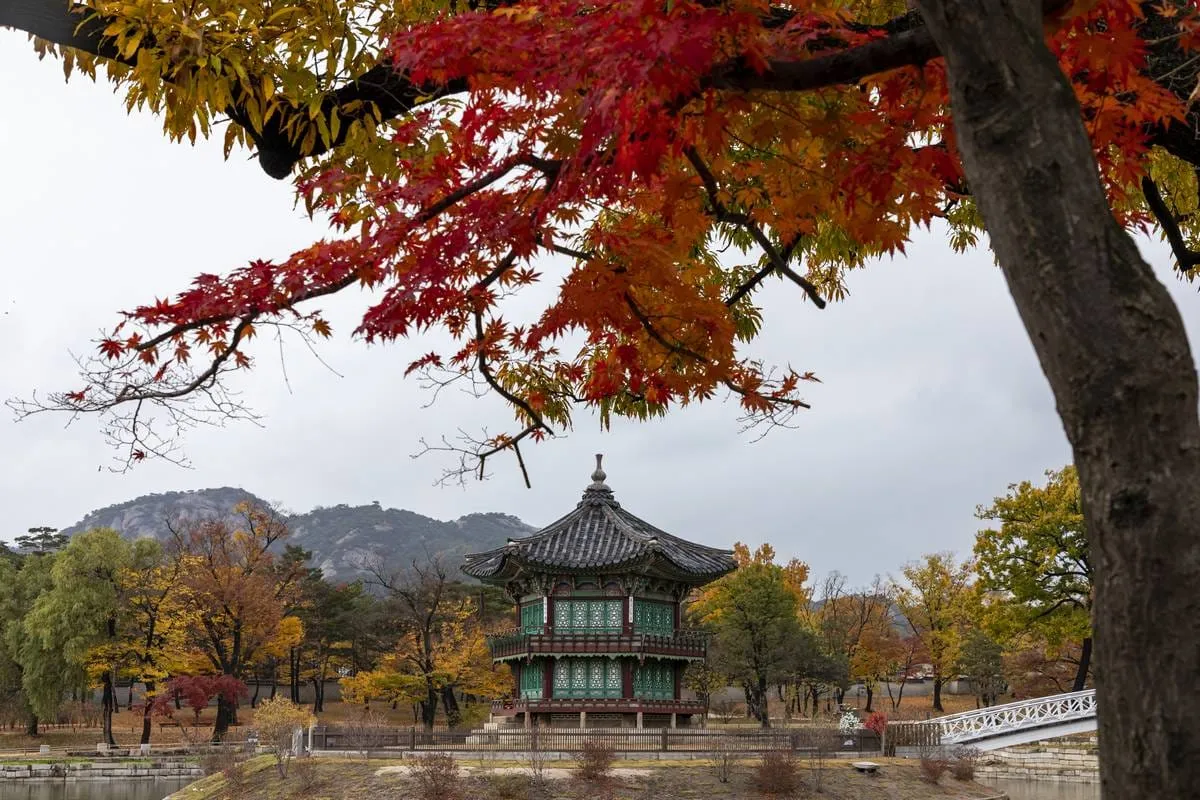
Autumn in South Korea usually starts in the mountains, with the first leaves changing in late September before the colors gradually make their way across the rest of the country. By October, hiking trails, palace grounds and city parks are filled with shades of red, orange and yellow.
If you're planning an autumn trip to Korea, timing matters. Peak foliage can vary by several weeks depending on where you go, so we've gathered the 2026 fall foliage forecast along with some of our favorite places to enjoy the season.
South Korea fall foliage forecast 2026
Here are the forecasted dates for the 2026 season, showing the approximate first color change and the expected peak viewing times across the country.
South Korea fall foliage map 2026 forecast
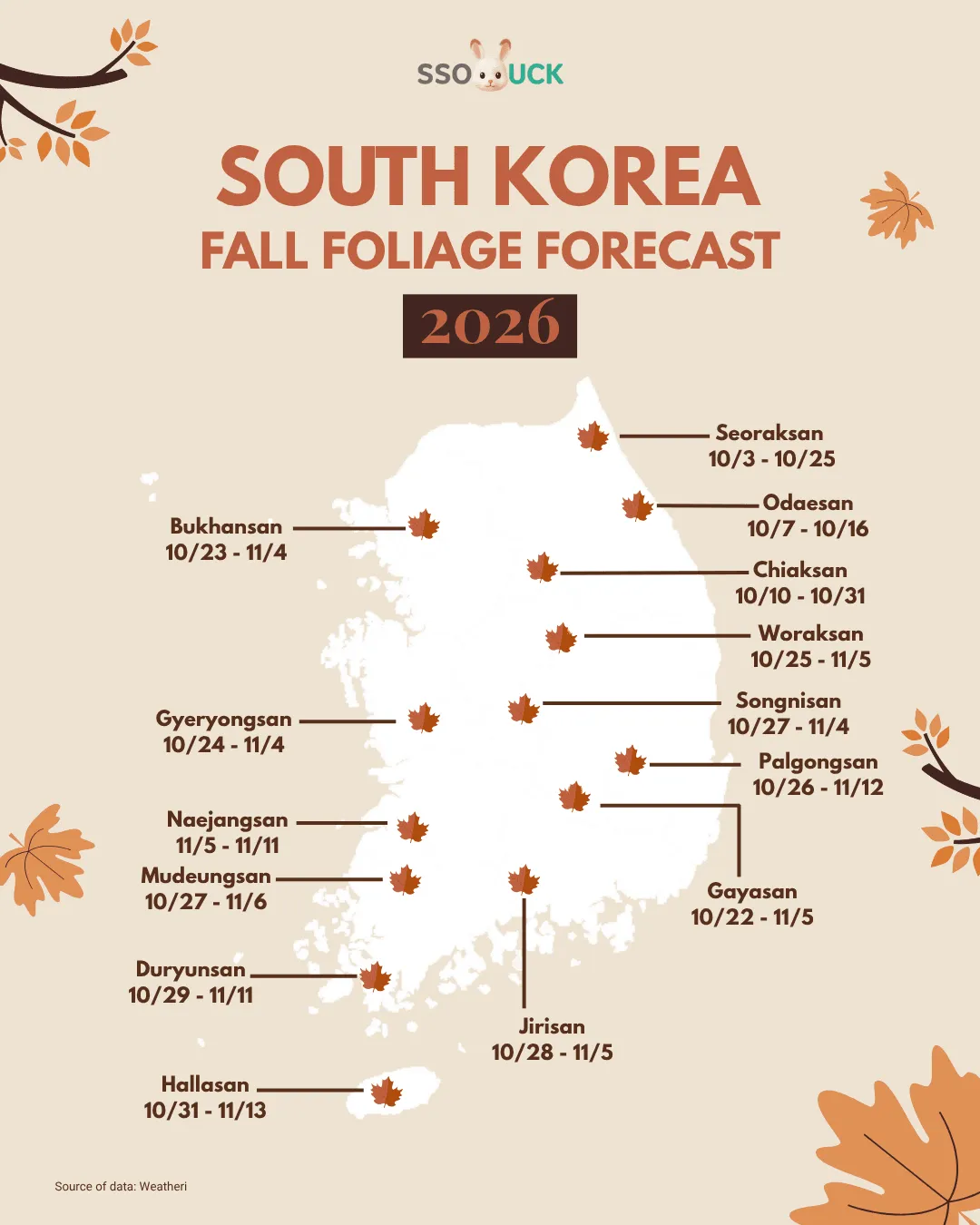
Note: Dates may vary slightly depending on weather and altitude.
When Is the Best Time to See Autumn Leaves in Korea?
Fall foliage doesn't arrive everywhere in Korea at the same time. The season usually starts in the northern mountains in late September, then moves gradually south, with some of the latest colors appearing on Jeju Island.
Northern Korea (Seoraksan, Odaesan, Chiaksan): The first autumn colors usually appear in the mountains in late September, with peak foliage following in October. Seoraksan is generally one of the earliest places to change, making it a popular choice if you're visiting Korea at the beginning of the season.
Central Korea (Seoul, Bukhansan, Nami Island, Songnisan): Autumn colors usually reach Seoul and the surrounding areas in mid to late October. You don't necessarily need to leave the city to see them either. Seoul's palaces and parks have plenty of maple and ginkgo trees, while Bukhansan is an easy option if you'd rather spend the day hiking.
Southern Korea (Busan, Jeonju, Naejangsan, Jirisan, Gayasan): Head farther south and the season comes a little later, generally from late October into early November. Naejangsan is one of Korea's best-known autumn destinations, particularly around the beginning of November.
Jeju Island (Hallasan): Jeju is one of the last stops of the foliage season. Around Hallasan, autumn colors generally appear from late October into November, so it's worth considering if your trip falls later in the season.
Practical Tips
Avoiding crowds: Popular autumn destinations such as Seoraksan and Naejangsan can get very busy on weekends, especially around peak foliage. If you can, visit on a weekday or get there early in the morning.
Late-season trips: Traveling in November? Look farther south. Naejangsan, the mountains around Busan and Jeju Island tend to change later than destinations in northern and central Korea, giving you a better chance of catching the autumn colors.
Top 23 Fall Foliage Destinations in Korea (2026)
Below is a list of some of Korea’s best autumn color spots:
Mountains & National Parks
Seoraksan National Park
Seoraksan in Gangwon is usually one of the first places in Korea to change color, making it a good choice for an early autumn trip. The contrast between the granite peaks and the red and orange forests is one of the reasons it's such a popular destination during foliage season.
For a full-day hike, Ulsanbawi Rock has wide views across the surrounding mountains. You can also take the cable car to Gwongeumseong if you'd rather see the foliage without a long climb. Down in the valleys, walking trails follow streams and lead to temples including Baekdamsa. Seoraksan gets particularly busy around peak foliage, so try to visit on a weekday if you can.
Naejangsan National Park
Naejangsan in Jeolla is known for its maple trees and is one of Korea's most popular places to visit later in the foliage season. The Maple Tree Tunnel near Naejangsa Temple is the best-known spot, with branches forming a canopy over the path.
Other places to stop include Uhwajeong Pavilion and Baegyangsa Temple. There is also a cable car to an observatory, along with walking trails and longer hiking routes through the park. Colors here tend to peak later than at Seoraksan, often around late October or early November.
Jirisan National Park
Jirisan stretches across three provinces, so the timing of the foliage varies depending on the trail and elevation. This also gives you more options if you want to spend more than one day exploring the park.
Piagol and Bamsagol are two valleys worth considering in autumn, with trails running alongside streams, waterfalls and forested slopes. More experienced hikers can head toward Cheonwangbong, the highest peak in mainland South Korea, although reaching the summit requires a much more demanding hike.
Bukhansan National Park
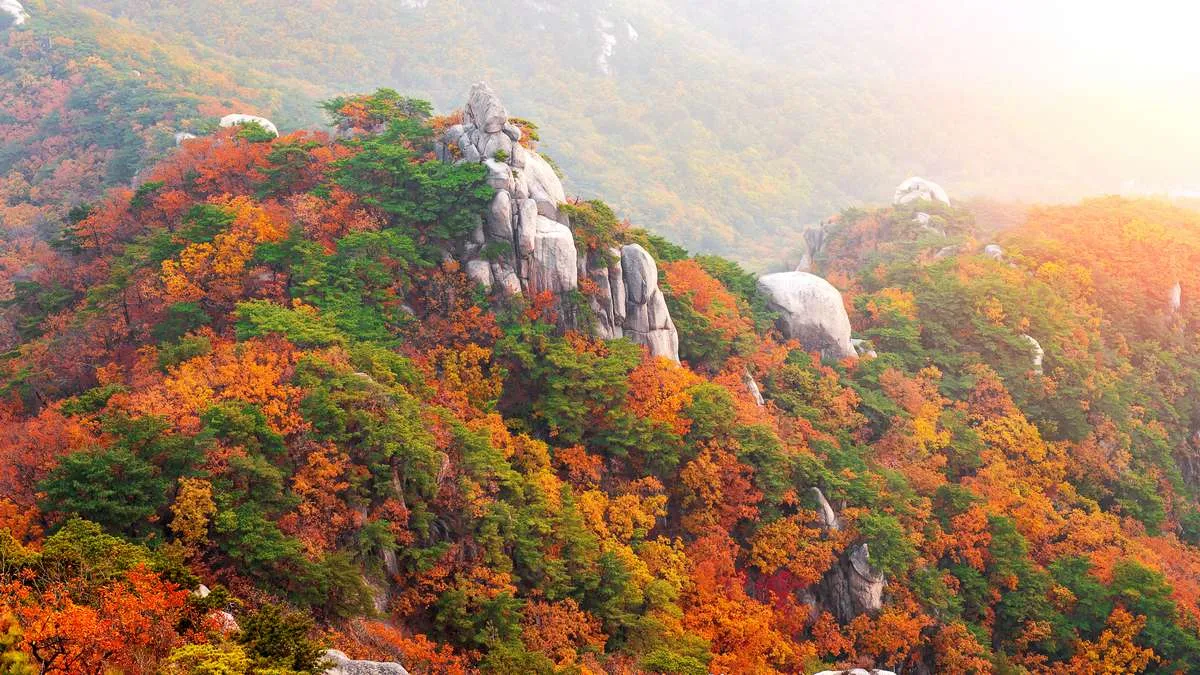
Bukhansan sits right on Seoul's doorstep, so it's one of the easiest places to add to a trip if you're staying in the capital. In autumn, the foliage spreads across the mountain around its granite peaks, temples and sections of Bukhansanseong Fortress.
There are routes for different levels, from shorter walks around the temples to the climb up Baegundae, the park's highest peak at 836 meters. Bukhansan is easy to reach from Seoul, but that also means the most popular trails can get crowded during peak foliage. A weekday visit is usually the better choice.
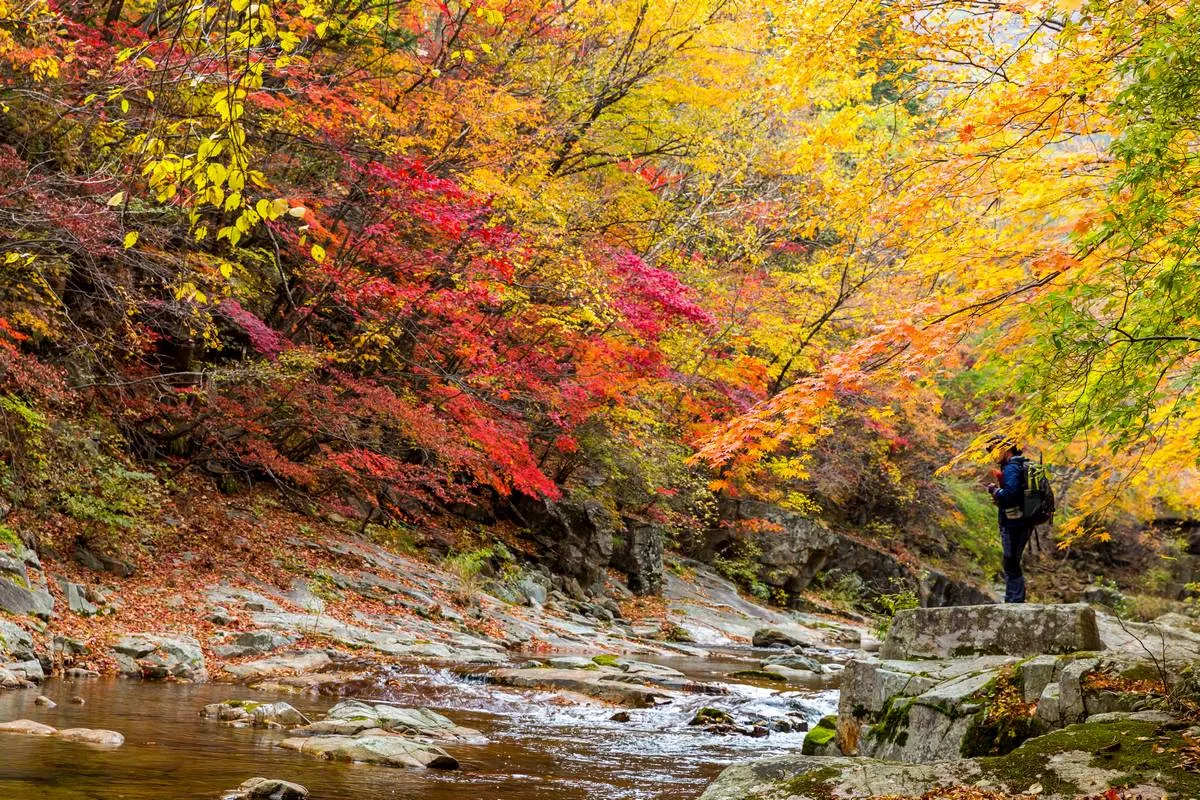
Odaesan National Park
Odaesan in Gangwon is a good option if you're looking for autumn foliage without necessarily planning a difficult hike. One of its best-known walks is the Fir Tree Forest Trail, which leads through a forest of tall firs to Woljeongsa Temple.
For a longer walk, the Seonjae-gil Trail follows the Odaecheon Stream between Woljeongsa and Sangwonsa temples. The combination of forest trails and Buddhist temples makes Odaesan particularly easy to explore at a slower pace.
Daedunsan National Park
Daedunsan is known for its rocky peaks and steep hiking routes, but you don't have to climb the entire mountain to see the autumn foliage. A cable car takes visitors part of the way up and gives access to some of the park's best-known viewpoints.
From there, the red Geumgang Cloud Bridge crosses a gorge between the cliffs. Hikers continuing farther up will also come across the steep Samseon Stairs before reaching the higher sections of the mountain. Expect plenty of stairs if you decide to keep going.
Hallasan National Park
At 1,950 meters, Hallasan is the highest mountain in South Korea and dominates the center of Jeju Island. Because of the difference in elevation between the summit and the lower forests, the autumn colors don't appear across the mountain all at once.
The Seongpanak and Gwaneumsa trails lead to Baeknokdam crater at the summit and require a full day of hiking. For something shorter, Yeongsil is a popular alternative with views of Hallasan's rocky formations and surrounding slopes. The foliage starts at higher elevations before gradually moving down the mountain as the season progresses.
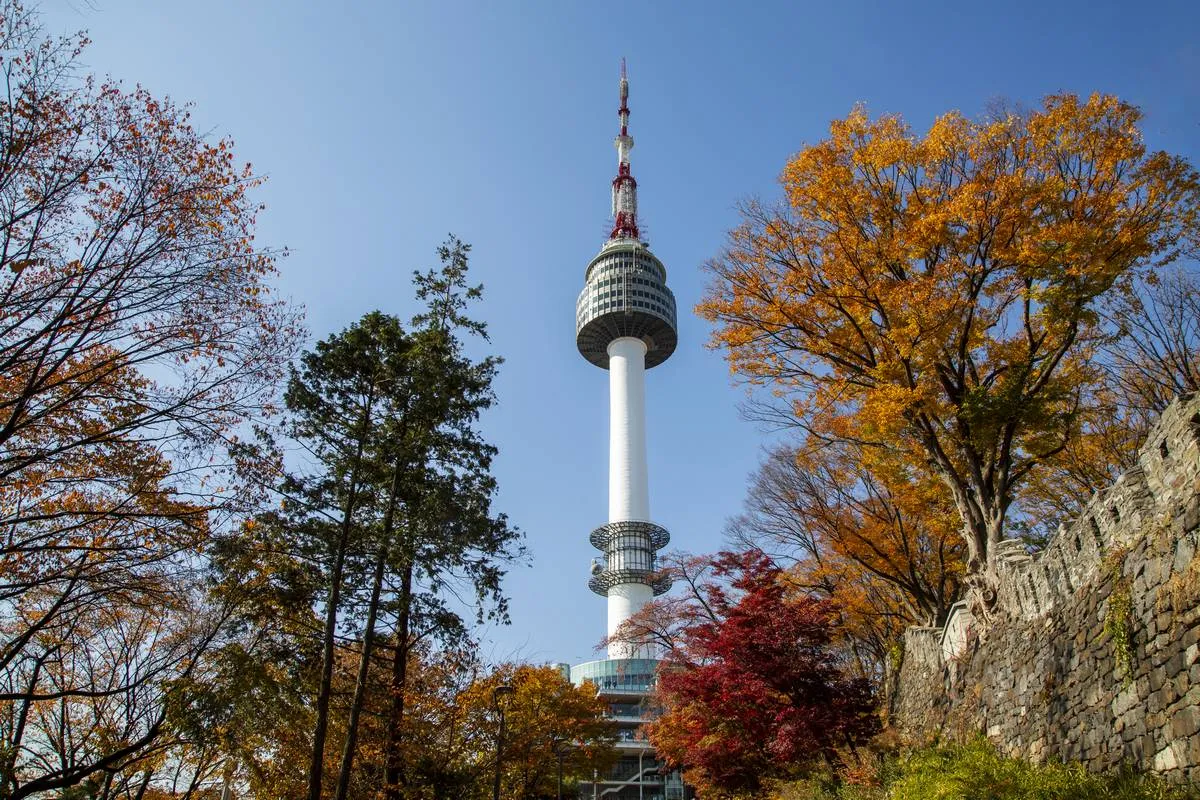
Cities & Cultural Sites
Namsan Park (Seoul)
If you're visiting Seoul during autumn, Namsan is one of the easiest places to see the foliage without leaving the city. The 270-meter hill is topped by N Seoul Tower and surrounded by the Namsan Dulle-gil, a network of walking trails that circles the mountain.
Autumn is also when the park changes the most. The northern loop is lined with ginkgo trees and closed to traffic, making it an easy walk for families or anyone looking for a quieter route. The southern side is steeper and opens onto wide views of central Seoul, especially around sunset when the city lights begin to come on.
Gyeongbokgung Palace (Seoul)
Built in 1395, Gyeongbokgung was the main palace of the Joseon Dynasty and is still the largest of Seoul's five royal palaces. Its grounds stretch from the main gates to pavilions, courtyards and gardens, with Bugaksan Mountain rising just behind the palace.
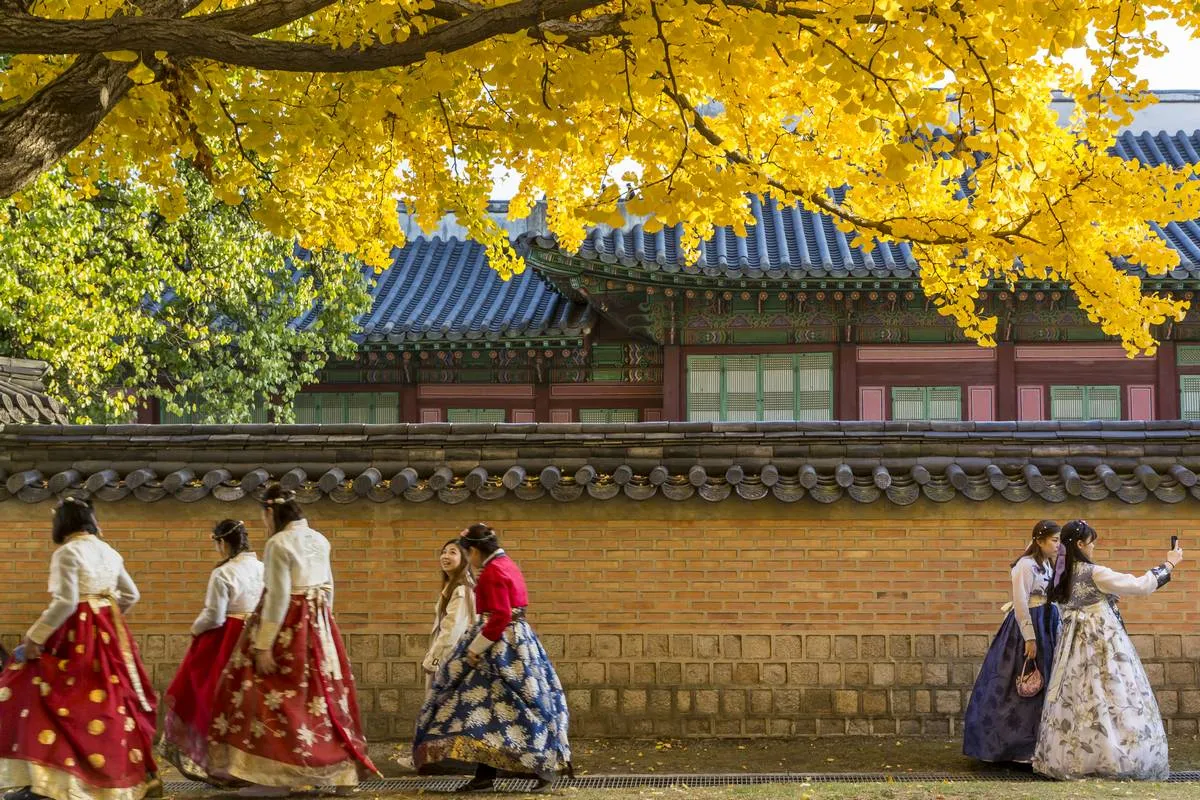
In late October, the palace becomes one of Seoul's best places to see autumn colors. Ginkgo trees turn the entrance golden, while the maples around Hyangwonjeong Pavilion add deep shades of red around the pond. It's an easy stop to combine with Bukchon Hanok Village or Insadong if you're spending the day in central Seoul.
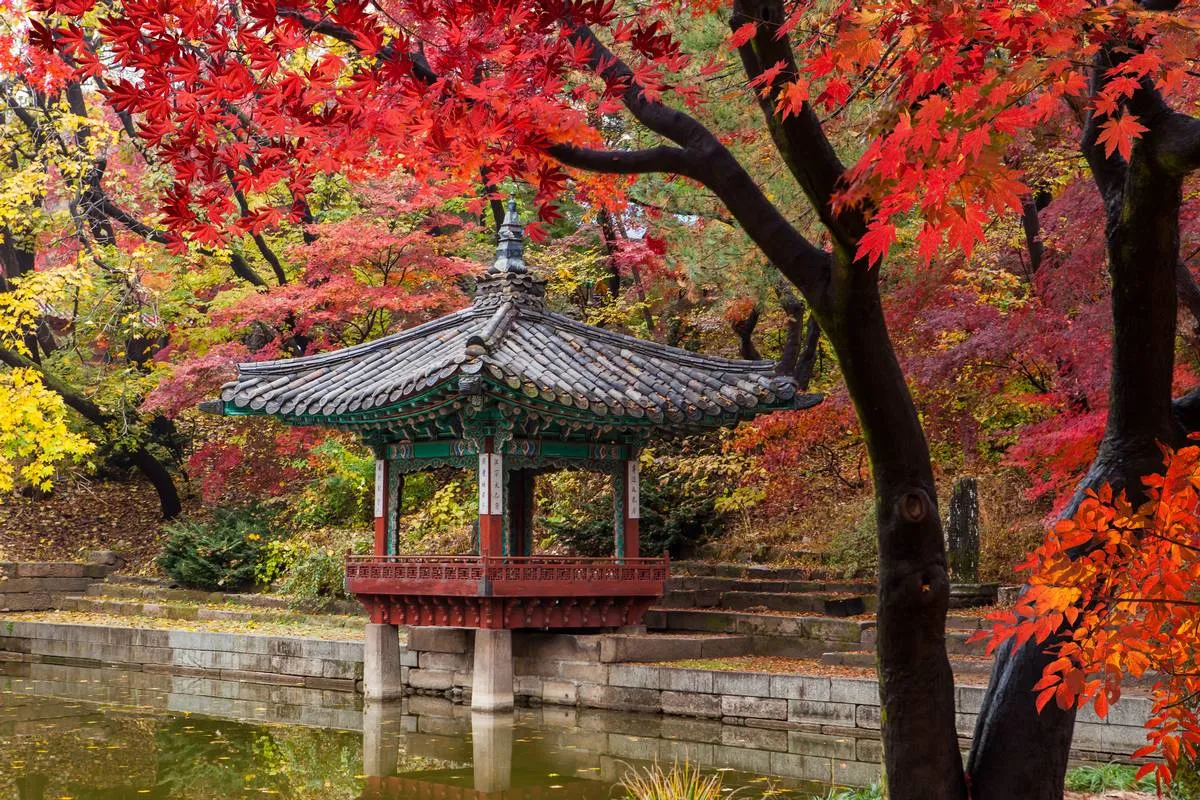
Changdeokgung Palace & Huwon (Seoul)
Changdeokgung feels very different from Gyeongbokgung in autumn. Much of Huwon, the palace's Secret Garden, follows the natural terrain, with maple trees growing around ponds, pavilions and wooded paths.
Buyongji Pond and the area around Aeryeonjeong are particularly worth seeing once the leaves begin to change. Huwon is also much more wooded than the main palace grounds, so this is a good place to spend a little longer walking rather than simply stopping for photos. Access to the garden is limited, so check the current admission and reservation rules before your visit.
Bukchon Hanok Village (Seoul)
Sitting between Gyeongbokgung and Changdeokgung, Bukchon is known for its narrow streets and traditional hanok houses. Autumn adds a few pockets of color between the tiled roofs, stone walls and views toward Bugaksan Mountain.
Gahoe-dong is one of the best-known areas for views across the rooftops, but it's worth wandering beyond the main photo spots too. Keep in mind that Bukchon is a residential neighborhood, not an open-air attraction. Some streets have restrictions for visitors, so check the current access hours and keep noise to a minimum.
Samcheongdong (Seoul)
Samcheongdong is an easy addition after visiting Bukchon or Gyeongbokgung. In autumn, ginkgo trees turn yellow along the streets and you'll find smaller patches of red foliage tucked between the buildings.
There are plenty of cafés, galleries and small shops in the area, so it works well as a place to stop for lunch or coffee between the nearby palaces and Bukchon.
Bulguksa (Gyeongju)
Bulguksa is one of Gyeongju's best-known historic sites and part of a UNESCO World Heritage Site. The temple has roots going back to the Silla period, and its stone terraces, stairways and wooden halls look particularly different once the surrounding trees start to change.
Maples and ginkgo trees grow throughout the grounds, but autumn also brings another detail that's easy to miss: persimmons hanging from the trees around the temple. Cheongungyo and Baegungyo, the two stone stairways at the front of the temple, are another spot worth looking out for as you walk through the complex.
Gardens, Forests, Islands
Olympic Park (Seoul)
Olympic Park in Songpa-gu gives you plenty of space to see the autumn colors without leaving Seoul. The park combines large lawns and walking paths with Mongchon Fortress, an earthen fortification dating back to the Baekje period.
For autumn foliage, walk around Mongchon Fortress or follow the paths near Seongnae Stream, where the trees start turning red and yellow. You'll also find long rows of ginkgo trees around the park, which are particularly worth catching once the leaves turn bright yellow.
Seoul Forest (Seoul)
Seoul Forest is another easy option for an autumn walk in the city, especially if you're already planning to spend time around Seongsu. The park has a mix of open lawns, wooded paths and smaller gardens, so the foliage changes quite a bit depending on where you walk.
The Ginkgo Tree Forest is an obvious stop in autumn, when both the trees and the ground turn yellow. You'll also find red and orange maples around the park's ponds and walking paths. Afterwards, Seongsu's cafés and shops are only a short walk away.
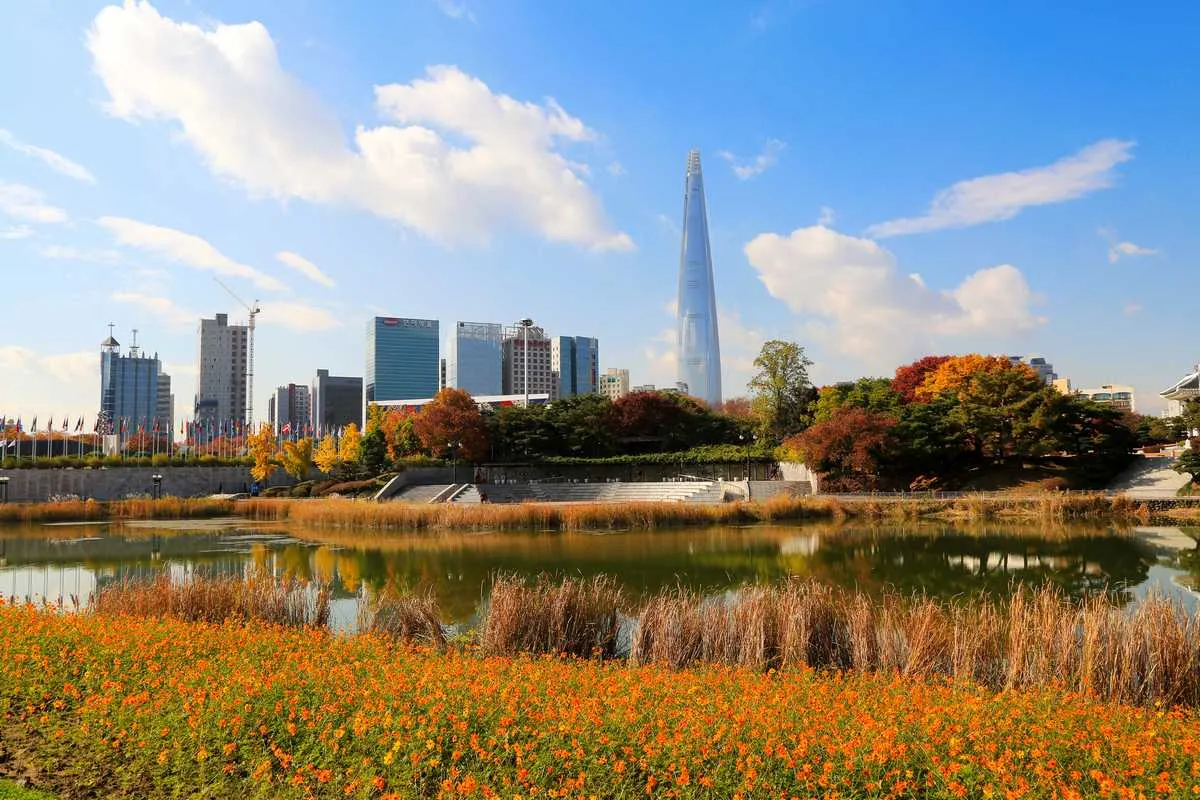
Seokchon Lake (Seoul)
Seokchon Lake has a flat walking path around the water, making it one of the easier places on this list for a casual autumn walk. It's also very different from the mountain and palace settings, with Lotte World and Lotte World Tower right beside the lake.
Maple and ginkgo trees line much of the path and their colors are reflected in the water once the foliage changes. You can walk the full loop or simply combine part of it with a visit to Lotte World, Songridan-gil or the surrounding Songpa area.
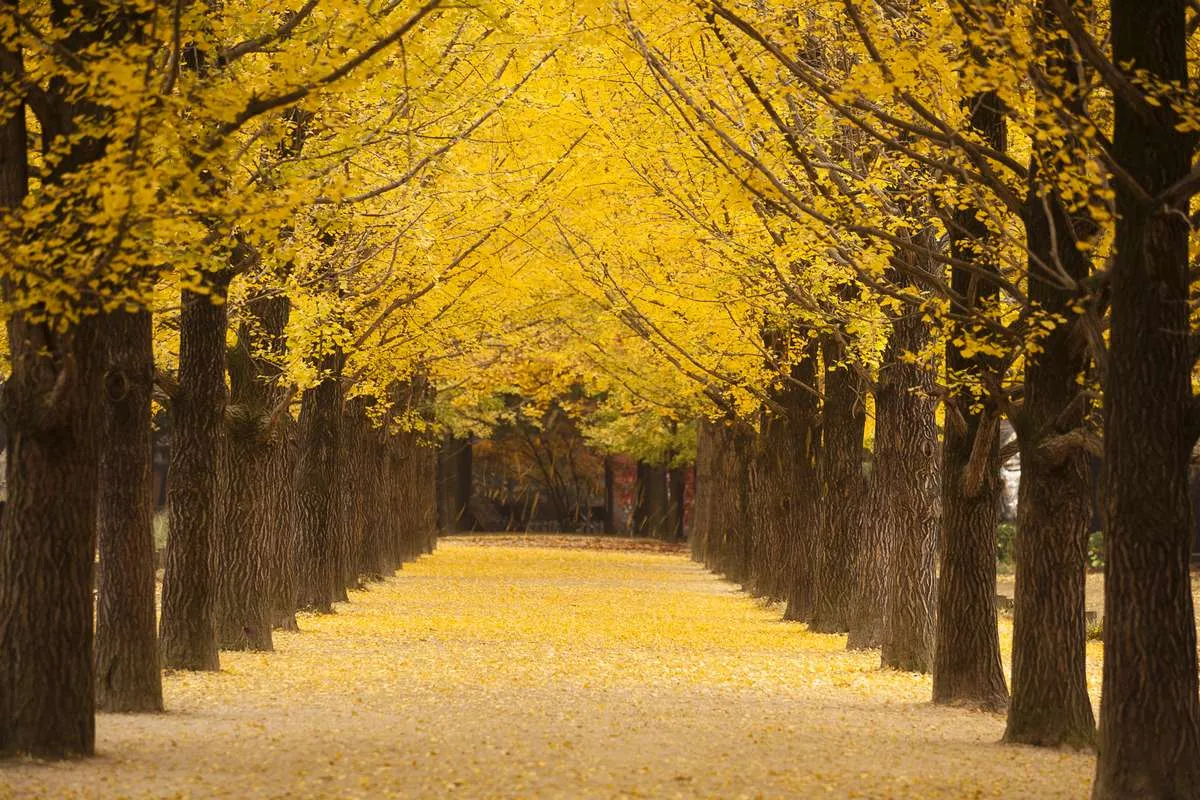
Nami Island (Chuncheon)
Nami Island is one of the best-known autumn day trips from Seoul, reached by ferry from Gapyeong. Because its trees change at slightly different times, the island doesn't look the same throughout the season.
Maples and katsura trees are among the first to change, followed by ginkgo trees and then the metasequoias later in autumn. Songpa Ginkgo Tree Lane is particularly popular once the leaves turn yellow, while Baekpungmilwon Maple Garden is a good place to look for deeper red colors. If you're visiting around peak foliage, expect the island to be busy, especially on weekends.
Garden of Morning Calm (Gapyeong)
The Garden of Morning Calm is an arboretum in the mountains of Gapyeong, with different gardens connected by walking paths, bridges and small pavilions.
In autumn, maples, ginkgo trees and oaks bring different colors to each part of the garden. Some of the nicest views are around the ponds and traditional-style buildings, where you can see the foliage against the water and surrounding mountains. The paths are easy to follow, so this is a good alternative if you want to see autumn colors without planning a mountain hike.
Hwadam Forest (Gwangju)
Hwadam Forest in Gwangju, Gyeonggi-do, is particularly known for its maple trees and is an easy autumn day trip from Seoul. The park is divided into different garden areas, with walking trails running through forests, valleys and landscaped sections.
You can explore most of it on foot or use the monorail for part of the route. Autumn is one of the busiest times to visit Hwadam Forest and tickets can sell quickly, so check the current reservation schedule before planning your trip.
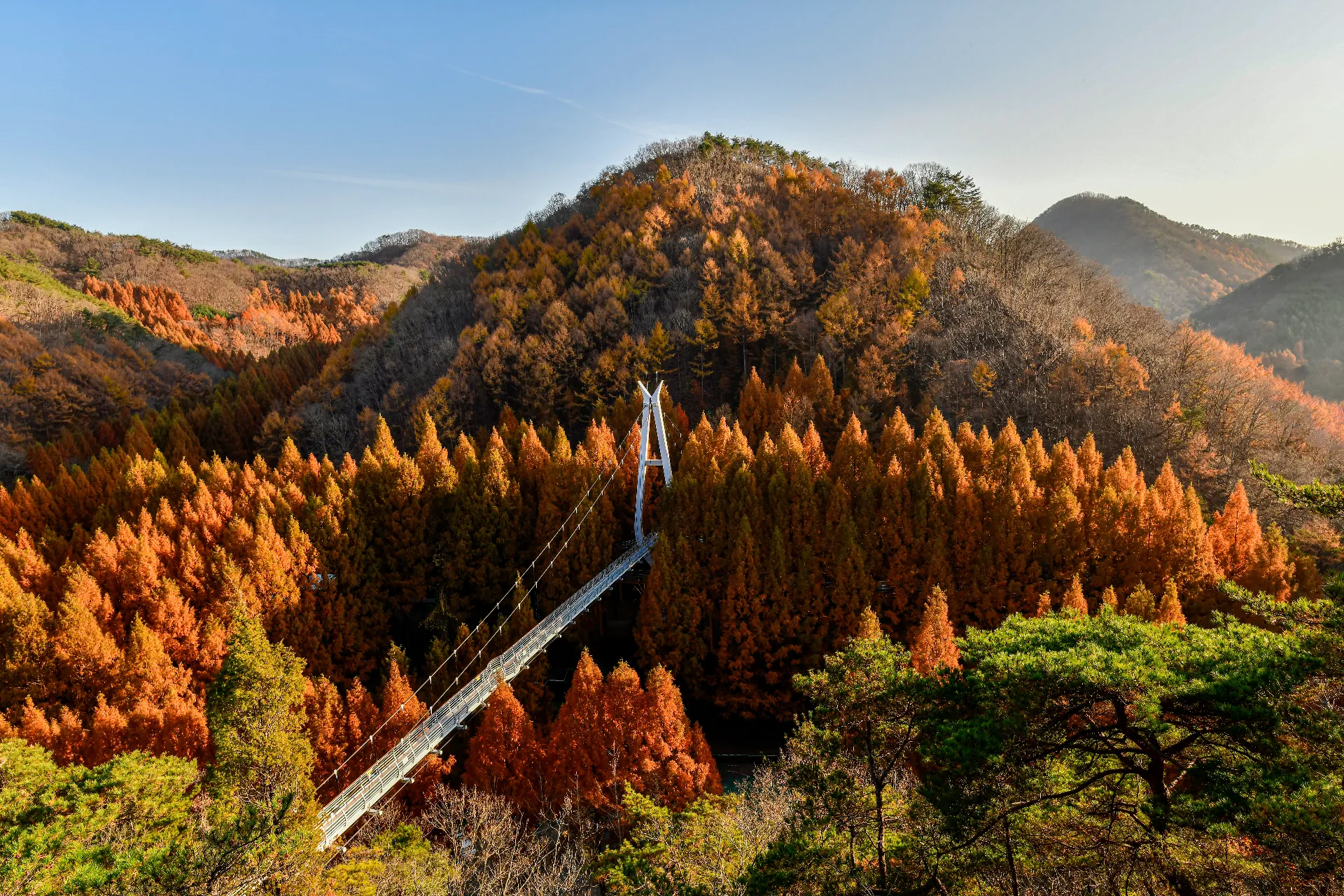
Jangtaesan Recreational Forest (Daejeon)
Jangtaesan, on the outskirts of Daejeon, is known for its metasequoia forest. The trees were first planted in the 1970s and now tower over the walking paths, turning from green to shades of orange and reddish brown later in autumn.
One of the best ways to see them is from the Skyway, an elevated walkway that runs through the trees. You can continue up to the Sky Tower for a view across the forest or stay on the lower trails around the pond. Small food stalls also pop up around the area, so you may find hotteok, pancakes or makgeolli after your walk.
Hongcheon Gingko Forest (Hongcheon)
Hongcheon Ginkgo Forest is unusual for one simple reason: thousands of ginkgo trees were planted in rows on what was originally private land. For most of the year, there's little reason for visitors to come here. Then the leaves turn yellow.
The forest is generally opened to the public for a limited period in autumn, when the rows of ginkgo trees are at their best. It's worth checking the opening dates before making the trip, as access isn't available year-round.
Damyang Metasequoia-lined Road (Damyang)
Damyang's Metasequoia-lined Road is a long avenue of trees planted in the 1970s. By late autumn, their leaves shift from green to rusty orange and brown, giving this stop a very different look from Korea's yellow ginkgo streets and red maple forests.
You can walk beneath the trees rather than simply seeing them from the road, and there are other attractions nearby if you're spending the day in Damyang. Juknokwon Bamboo Garden is an easy one to combine with it.
Hantangang River Jusangjeolli Trail (Cheorwon)
If you've already seen plenty of temples and tree-lined paths, Hantangang offers something different. The 3.6 km trail follows the river past basalt cliffs, with sections built directly above the water.
The route includes bridges, stairs and elevated walkways, so expect more than a flat riverside stroll. In autumn, the trees along the gorge change color above the dark volcanic rock. The trail can be accessed from the Sundam and Deureuni sides, depending on how you want to plan the walk.
Autumn Flowers in Korea
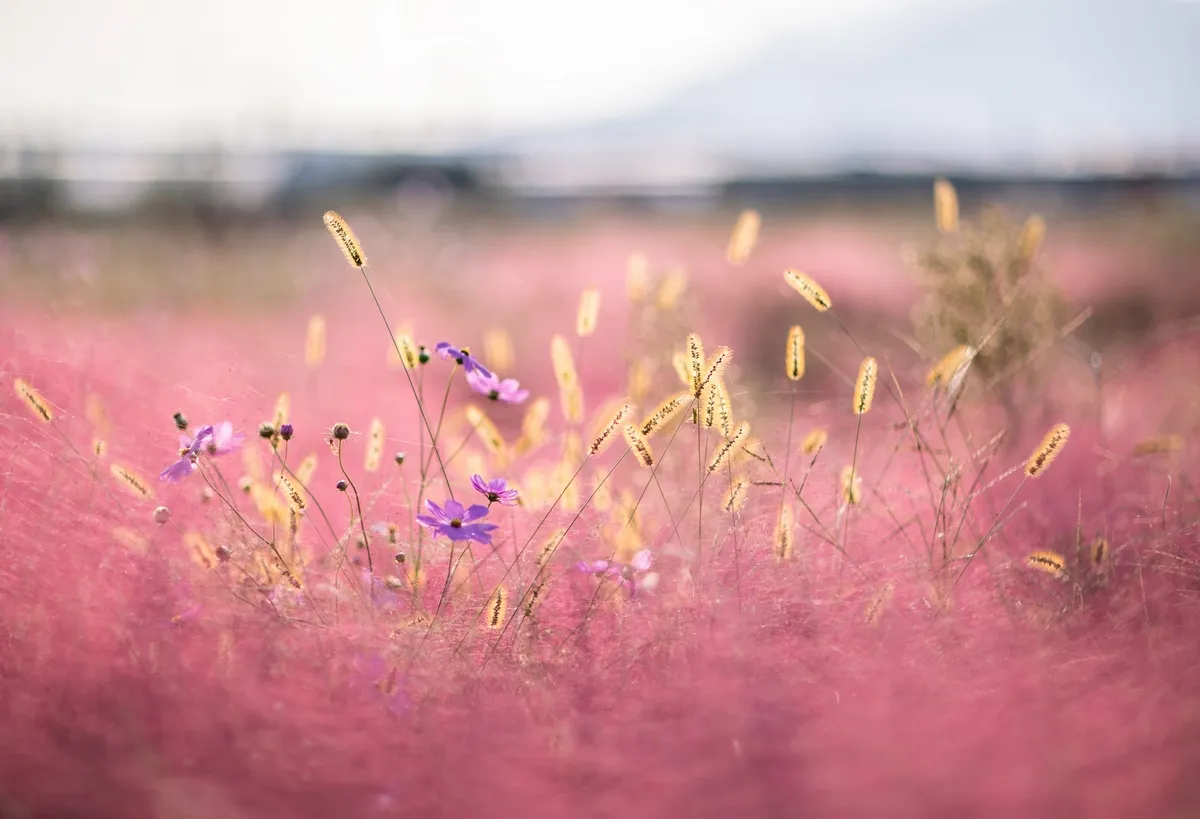
Autumn foliage isn't the only seasonal change you'll see in Korea. September and October are also good months for flower fields, with pink muhly, silver grass, cosmos and other autumn blooms appearing in parks around the country.
Pink Muhly Grass
Pink muhly usually starts turning pink around early autumn and has become a popular backdrop for photos. You'll find patches of it in several parks, including Olympic Park in Seoul. Haneul Park is another well-known autumn destination, although it's particularly associated with the silver grass that covers much of the park.
Silver Grass (Eulalia)
Silver grass is one of the main reasons to visit Haneul Park in autumn. Large sections of the park are covered with it, and Seoul's annual Silver Grass Festival is usually held here in October.
Buckwheat Flowers
For buckwheat flowers, Pyeongchang is the name to know. The area is closely associated with writer Lee Hyo-seok and his short story "When Buckwheat Flowers Bloom", and fields of small white flowers appear around his hometown during the flowering season.
Chrysanthemums
Chrysanthemums appear in parks, gardens and seasonal displays across Korea during autumn. Rather than planning a trip around them, they're often something you'll come across while visiting botanical gardens or local festivals.
Cosmos Flowers
Cosmos bloom relatively early in the season, often before Korea's fall foliage reaches its peak. Pink, white and purple flowers can be found along rivers and in city parks, including Olympic Park in Seoul. If you're traveling in September and it's still too early for autumn leaves, they're worth looking out for.

Sunchang Jangryu Festival 1-Day Tour
From $15 · Easy booking
Explore This TourAutumn Festivals in Korea (2026)
Autumn also brings some of Korea's biggest festivals, and several fall right around foliage season. Here are a few highlights you can combine with your foliage trip.
Seoul International Fireworks Festival
September 4-5, 2026 | Seoul |
Held along the Han River, the Seoul International Fireworks Festival brings large-scale fireworks displays to the heart of the city. Yeouido is one of the main viewing areas and gets extremely crowded, so arriving early is a good idea if you want a spot by the river.
Gangnam Festival - Yeongdong-daero K-pop Concert
October 3-5, 2026 | Seoul
Gangnam Festival takes place across several locations in the district, with K-pop performances and other cultural events on the program. The K-pop concert is one of its main events and a good option if you're already planning to spend time in Gangnam.
Andong Mask Dance Festival
September 24-October 4, 2026 | Andong, Gyeongsangbuk-do
Andong's annual mask dance festival brings traditional and contemporary performances, parades and activities to different parts of the city. It's also a good reason to spend more time in Andong and explore the surrounding area during an autumn trip.
Jaraseom Flower Festa
September 12-October 5, 2026 | Gapyeong, Gyeonggi-do
Jaraseom's flower festival fills the island with seasonal gardens and flower displays, along with performances and other activities. Since it's held in Gapyeong, you can easily pair it with Nami Island or the Garden of Morning Calm.
Busan International Film Festival
October 6-15, 2026 | Busan
The Busan International Film Festival brings screenings, premieres and other film events to venues across Busan. Many of the main events take place around the Busan Cinema Center, so the festival is easy to work into a few days in the city.
Frequently Asked Questions (FAQ)
When is peak autumn foliage in Seoul in 2026?▾
Peak foliage in Seoul is expected from late October to early November. Bukhansan is forecast to reach its autumn foliage period between October 23 and November 4, while parks and palace grounds across the city may change at slightly different times.
Where is the best place to see fall leaves in Korea?▾
It depends on when you're visiting. Seoraksan is a good choice earlier in the season, while Naejangsan and Hallasan change later. If you're staying near Seoul, Bukhansan, Nami Island and the city's palaces are easier options to add to your itinerary.
What’s the weather like in Korea in October?▾
October is generally mild during the day but can feel much cooler in the morning and evening, especially in the mountains. Bring layers and a light jacket, and add something warmer if you're planning an early-morning hike.
Is Jeju worth visiting in autumn?▾
Yes, especially if you're traveling later in the season. Hallasan changes later than many mountains on the mainland, with the 2026 autumn foliage period forecast from October 31 to November 13. It's a good option for combining hiking with a few days elsewhere on Jeju.